What Is Wheel Offset?

ET Explained, Examples & Fitment Guide

Wheel offset is the distance between the wheel’s centreline and the mounting surface that attaches to the hub.

  • A negative offset pushes the wheel outward, creating a wider stance and a deeper dish
  • A positive offset pulls the wheel inward, pulling it further inside the wheel arch

Getting the correct offset is essential for maintaining proper handling, steering, and clearance. The wrong offset can cause suspension clearance issues, tyre rubbing, and reduced overall performance.

Whether you’re upgrading your 4×4 or improving off-road capability, understanding offset will help you choose the right fitment with confidence.

What does ET mean on wheels?

Wheel offset is usually shown as ET followed by a number, such as ET35.

Examples:

  • ET35 = wheel sits 35 mm inward (positive offset)
  • ET-20 = wheel sits further outward (negative offset)

Understanding ET markings helps you compare wheels and ensure correct fitment.

How wheel offset works

Offset is measured from the wheel’s centreline to the mounting surface:

  •  Zero offset (ET0) → hub sits in the centre
  • Positive offset → wheel sits further in
  • Negative offset → wheel sits further out

Example:
 A wheel with ET-50 will sit significantly further out than a standard wheel, creating a wider stance.

Types of wheel offset

Negative Offset (ET-)

  • Pushes wheels outwards
  • Creates a wider, more aggressive stance
  • Improves inner clearance

Zero Offset (ET0)

  • The wheel sits centrally
  • Provides balanced clearance on both sides

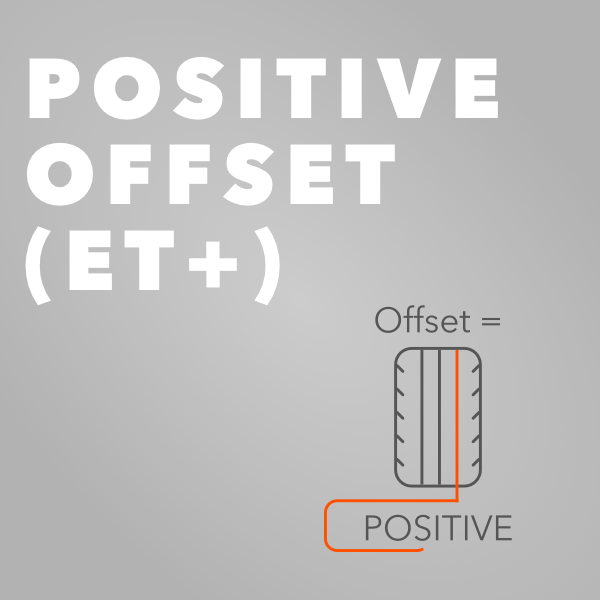
Positive Offset (ET+)

  • Pulls wheels inwards
  • Typical of factory setups
  • Maintains stability and standard fitment

Why wheel offset matters

Choosing the correct offset affects:

  • Handling and steering response
  • Suspension and brake clearance
  • Tyre wear
  • Vehicle stance and appearance

An incorrect offset can cause rubbing, instability, or premature wear.

How to choose the right wheel offset

The ideal offset depends on how you use your vehicle:

  • Daily driving → stay close to the factory specifications
  • Off-road use → a slightly negative offset improves stance and clearance
  • Performance setups → a balanced offset improves stability

Always check:

  • Suspension clearance
  • Brake caliper clearance
  • Wheel arch fitment

If unsure, choose wheels designed specifically for your vehicle.

Wheel offset vs spacers

Wheel spacers effectively reduce offset by moving the wheel outward.
Example:

  • Adding a 20mm spacer reduces the offset by 20mm

Spacers can improve stance and clearance, but must be fitted correctly to ensure safety.

Explore wheel spacers >

Choosing Tyres for Your 4x4

If you’re upgrading your wheels, offset is only one factor. You’ll also need to consider tyre type and intended use.

For example:

All-terrain tyres offer balanced on- and off-road performance
Mud-terrain tyres provide maximum grip in challenging conditions

Choosing the right combination of wheels and tyres ensures the best performance on and off the road.

deeper dish steel wheel

Looking for a deeper dish look for your 4×4?

For vehicles such as Land Rover, Volkswagen, and Ford models, selecting wheels with a deeper dish can enhance both appearance and performance, improving handling and grip.

If you’re upgrading your setup, it’s important to choose the right combination of wheels and tyres for your vehicle. Explore our range of all-terrain tyres for balanced performance, or mud-terrain tyres for more aggressive off-road use. You can also shop for alloy and steel wheels for your 4×4 to find the right fitment for your setup.

It’s always advisable to seek expert advice to ensure compatibility with your vehicle and avoid clearance or suspension issues. Our team is here to help.

Understanding wheel offset visually

Wheel offset determines how far your wheels sit in or out of the wheel arches. Although the measurements are shown as ET values, the easiest way to understand offset is to see how it changes the wheel’s position.

Below, we break down the three types of offset — negative, zero, and positive — to show how each affects stance, clearance, and overall fitment.

Use these examples to quickly understand how different offsets will look and perform on your vehicle.

Shop wheels by vehicle or by size >

Negative Offset info graphic

Negative Offset (ET-)

A negative offset means the mounting surface sits closer to the inside of the wheel, pushing the wheel outward.

Results:

  • Wider stance
  • More aggressive look
  • Increased clearance in the inner suspension

Example:
A wheel with ET-20 will sit further out than a standard wheel, creating a deeper dish appearance.

Zero Offset (ET0) visual graphic

Zero Offset (ET0)

A zero offset means the mounting surface aligns exactly with the wheel’s centreline.

Result:

  • Balanced positioning
  • Even spacing between the suspension and the wheel arch

Example:
A wheel with ET0 sits centrally within the wheel arch, maintaining a neutral stance.

Positive Offset (ET+) visual graphic

Positive Offset (ET+)

A positive offset means the mounting surface is closer to the wheel’s outer edge, pulling the wheel inward.

Result:

  • Wheels sit further inside the arches
  • Improved stability and factory-style fitment

Example:
A wheel with ET35 sits further inward, which is typical of many factory wheel setups.

Quick Comparison

  • Negative offset → pushes the wheels outwards
  • Zero offset → centres the wheel
  • Positive offset → pulls the wheels inwards

How offset affects your setup

Choosing the right offset affects:

  • Handling and stability
  • Suspension clearance
  • Overall vehicle stance

Find the right wheels for your vehicle

Choosing the correct offset ensures the right balance of performance, handling, and appearance. Browse our range of alloy and steel wheels by vehicle or by size to find the right fit, with expert advice available.

All products are available with UK-wide delivery or professional fitting.

Shop wheels by vehicle or by size >

GDPR 4X4 TYRES LOGO
Privacy Overview

This website uses cookies so that we can provide you with the best user experience possible. Cookie information is stored in your browser and performs functions such as recognising you when you return to our website and helping our team understand which sections of the website you find most interesting and useful.